
Public Welfare Live Preview | Shandong Xinbo Reproductive Toxicology Research Special Sharing
2026/01/16
This live broadcast focuses on multi species models and experimental stages, providing regulatory compliance guidelines and practical case analysis, covering topics such as rat placental toxicity.
1、 Live Time
January 18, 2026 (Sunday) 14:00-17:00
2、 Targeting the audience
Pharmaceutical industry technicians, R&D personnel, etc
3、 Key points of live streaming
This live broadcast is hosted by Li Yan, Senior Researcher of Pathology at Shandong Xinbo, and four experts will share on topics related to reproductive toxicology:
Introduction to Reproductive and Developmental Toxicity Testing of Medical Devices: Introduce the requirements for reproductive toxicity evaluation in the field of medical devices, analyze the principles of experimental design, implementation points, and regulatory adaptation logic.
Cai Rui | Perinatal Developmental Toxicity Test Design and General Considerations: Introduce the experimental grouping, exposure plan, indicator monitoring, and other aspects of perinatal reproductive toxicity assessment, share common problem solutions and optimization ideas.
Zhou Yaping | Rabbit Reproductive and Embryo Embryo Development Toxicity Test and Case Introduction: Taking the rabbit model as the core, this paper introduces the evaluation methods of reproductive toxicity and embryo development toxicity through case studies, analyzes the impact of species specificity in the experiment, and proposes corresponding strategies.
Wang Huijuan | Structure and Toxicology of Rat Placenta: Introduction to the Morphological Structure of Rat Placenta and Its Role in Developmental Toxicity Evaluation.
4、 Participation method

Reproductive toxicology research
Fertility and Early Embryo Development Toxicity Test (Stage I, Rat)
Embryo and fetal developmental toxicity test (stage II, rats, rabbits)
Perinatal Developmental Toxicity Test (Stage III, Rats)
Technical methods:
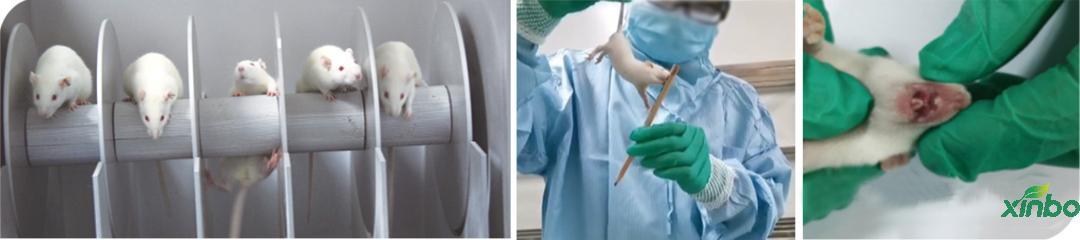
Milk collection: can repeatedly collect maternal milk for pharmacokinetic/toxicokinetic analysis
B-ultrasound examination of pregnant monkeys; Monkey cub X-ray bone examination; Examination of behavioral indicators in offspring mice; Fetal abdominal vein blood collection; Blood was collected from the central artery of the rabbit ear; Vaginal smear and sperm examination; Skeletal and visceral examination of fetal mice and rabbits
Toxic pathological examination
The pathology diagnosis laboratory has passed the toxicity pathology examination capability verification organized by the China National Accreditation Service for Conformity Assessment (CNAS), indicating that our company's professional ability in toxicity pathology diagnosis meets the relevant accreditation requirements of CNAS, and the test report issued has corresponding certification effect within the accreditation scope.
We have established a technical system covering routine and special materials, various histological and immunohistochemical staining techniques, suitable for non clinical safety evaluation of drugs and medical devices.
Technical methods:
Material selection: A standardized method for collecting commonly used experimental animals has been established, and based on the characteristics of the experiment, methods for collecting materials such as small pigs, monkeys' neurotoxicity tests, medical device related parts (skin, muscles, organs, bones, brain implants), special medication parts (nasal cavity, ears, etc.), animal tissue chips, etc. have been developed
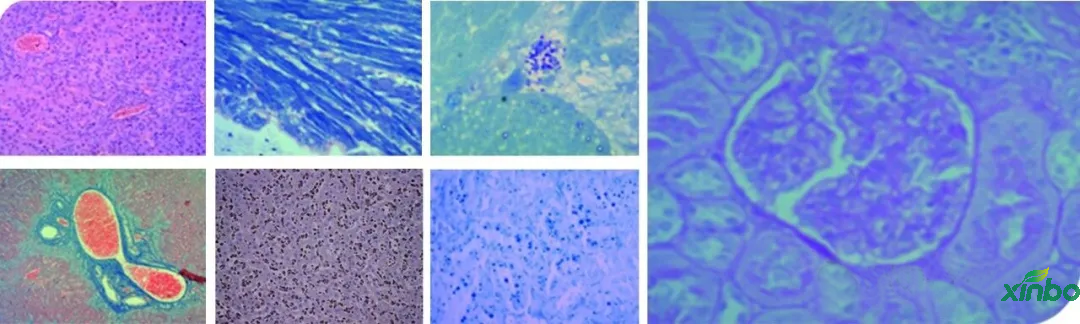
Staining: Conventional HE staining, immunohistochemical staining, special chemical staining (periodic acid Schiff's staining, Masson trichrome staining, Mallory phosphotungstic acid hematoxylin staining, starch staining, toluidine blue staining, Oil Red O staining, etc.).
Toxic Pathology Platform
The pathological diagnosis laboratory has passed the proficiency testing for toxic pathology organized by the China National Accreditation Service for Conformity Assessment (CNAS), demonstrating that the company's professional capabilities in toxic pathology meet the relevant CNAS accreditation requirements. The test reports issued within the accredited scope carry corresponding evidential validity.
A technical system encompassing routine and special tissue sampling, as well as various histochemical and immunohistochemical staining methods, has been established, suitable for non-clinical safety evaluation of drugs and medical devices.
Establish multiple sampling and staining techniques for preclinical evaluation of various drugs and medical devices.
featured technology
Sampling techniques: Establish standardized sampling techniques for commonly used experimental animals, and develop special sampling techniques for small pig and monkey neurotoxicity tests, medical device related parts (skin, muscle, internal organs, bones, brain implants), special medication parts (nasal cavity, ears, etc.), and animal tissue chips based on experimental characteristics.
Staining techniques: Conventional HE staining, various immunohistochemical staining techniques, and special chemical staining techniques (periodic acid Schiff's staining, Masson trichrome staining, Mallory phosphotungstic acid hematoxylin staining, starch staining, toluidine blue staining, Oil Red O staining, etc.).
- Pre:Announcement・Xinbo Special Session | Reproductive Toxicology Special Session - 2026 Annual (3rd) Experimental Pathology Public Online Learning Conference
- Next:The first local operational document implementing Order No. 818 has been released! The "Guangdong Province Biomedical New Technology (Stem/Somatic Cell Field) Clinical Research Registration Work Guide